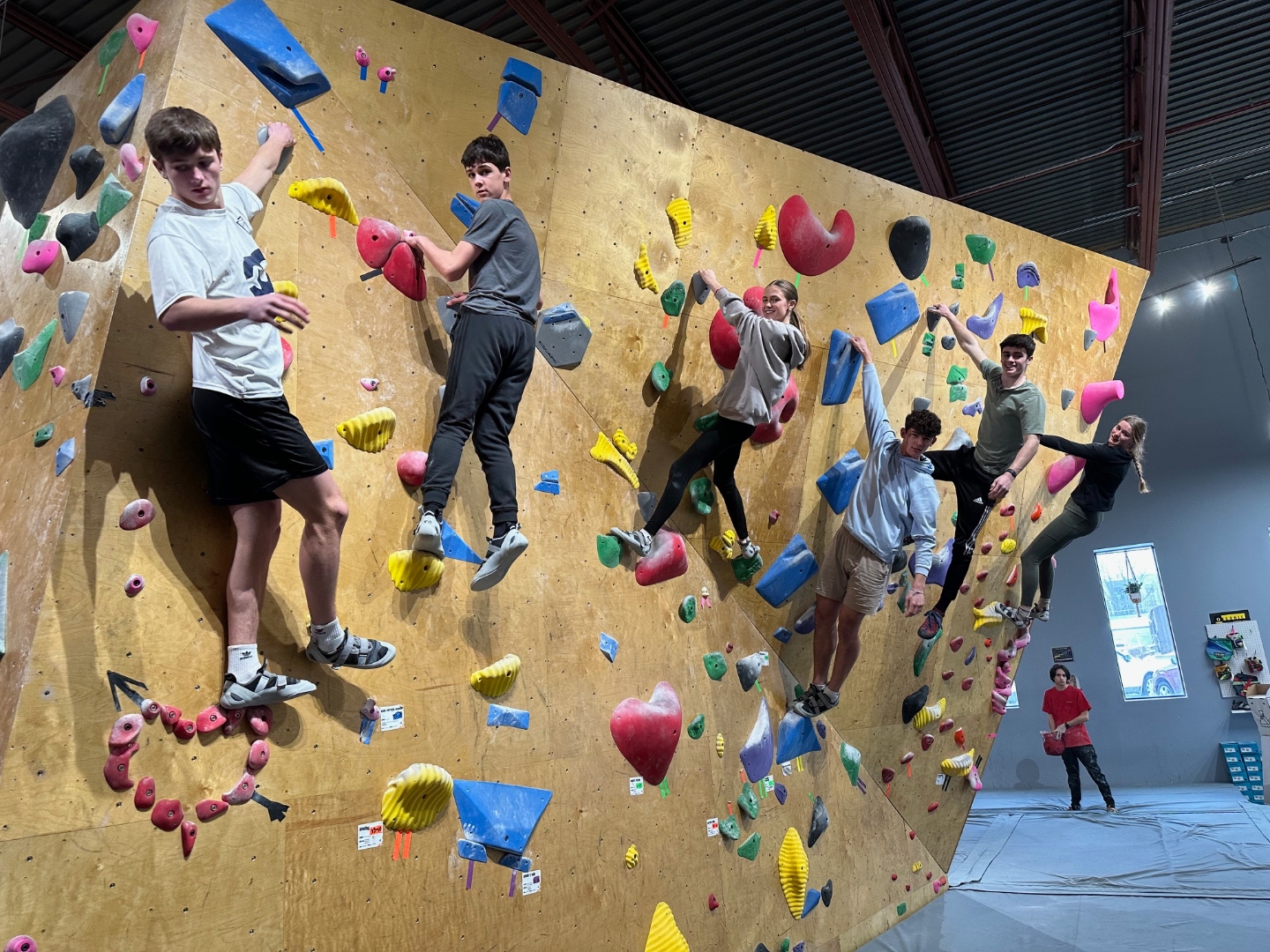
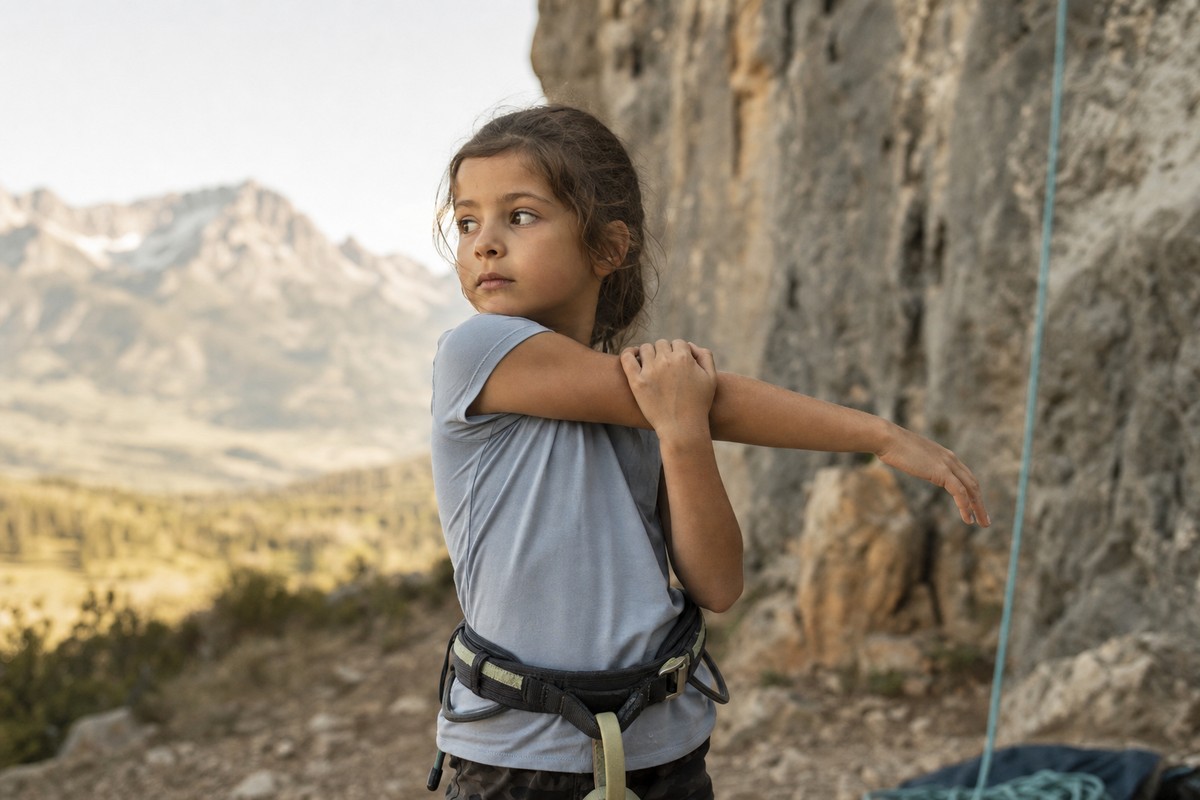
Picture this: your kid walks into the gym, drops their bag, and makes a beeline for the overhang wall. You know the one. The section with the pinchy crimps and the powerful moves they've been working for three weeks. They clip into their harness on the way, practically jogging. Two minutes later, a coach or a staff member calls them back. "Did you warm up?"
Your kid looks at you. You look at your kid. Neither of you is entirely sure what "warming up" means in climbing, or how long it should take, or whether those five minutes of goofing around on the traverse wall actually count.
This scenario plays out at gyms every week. And the good news is that fixing it is not complicated. A solid warm-up routine for a young climber takes about 15 to 20 minutes, protects the fingers and joints that take the most abuse, and — maybe most importantly — puts a kid in the right mental state to actually improve.
Here is what you need to know to help your climber build that habit.
Why Warm-Ups Matter More in Climbing Than in Most Sports
Climbing is unusual as a youth sport because of the load it places on finger tendons. Those tendons are not fully developed until the early twenties. In young climbers, the growth plates in the fingers are still open, which means the stress that would cause a minor strain in an adult can cause a more serious injury in a child.
This does not mean climbing is unsafe. It means the warm-up is doing real work. When your climber eases into activity gradually, blood flow increases to the tendons and connective tissue, making them more pliable and less susceptible to the kind of micro-tears that lead to overuse injuries.
The American Alpine Club and most major youth climbing organizations now include warm-up guidance in their coaching frameworks, and it has become standard practice in competitive programs. But recreational climbers — kids who come to the gym twice a week with a parent — often miss this piece entirely, because nobody explicitly taught them.
That is the gap this article is meant to fill.
How Long Should a Warm-Up Be?
For most recreational youth climbers, plan on 15 to 20 minutes before attempting anything near their limit. For younger kids (under 10), 10 to 15 minutes is often sufficient. For older kids and teens in competitive programs, some coaches prefer 25 to 30 minutes on days they are projecting or training hard.
The goal is simple: by the time they get on a challenging route, their muscles should feel warm, their fingers should feel responsive, and their heart rate should be slightly elevated but not taxed.
A Practical Warm-Up Routine
This routine is divided into three phases. You do not need special equipment or a coach present. Your kid can learn to do this independently within a few sessions.
Phase 1: General Movement (5 minutes)
The purpose of this phase is to raise the heart rate and get blood moving through the whole body before the fingers take any load at all.
- Light jogging or a brisk walk around the perimeter of the gym (2 minutes)
- Arm circles — forward and backward, 20 reps each direction
- Shoulder rolls — big slow circles, 10 forward, 10 backward
- Hip circles — hands on hips, wide slow rotations, 10 each direction
- Jumping jacks or jump rope — 30 seconds at an easy pace
This phase should feel easy. If your kid is already winded, slow it down. The goal is not fitness. It is circulation.
Phase 2: Finger and Forearm Activation (5 to 7 minutes)
This is the part that most young climbers skip entirely, and it is the most important part for injury prevention.
- Finger extensions: Spread fingers wide, hold 3 seconds, relax. Repeat 10 times per hand.
- Wrist circles: Slow, controlled circles in both directions, 10 reps each.
- Prayer stretch: Palms together in front of the chest, fingers pointing up, slowly lower the hands while keeping the palms together until you feel the stretch in the forearms. Hold 20 seconds.
- Reverse prayer stretch: Backs of the hands together, fingers pointing down, slowly raise the hands. Hold 20 seconds.
- Tendon glides: Open the hand flat, then make a hook fist (fingers bent at the top joint only, like a half-curl), then a full fist, then back to flat. Do this slowly, 10 times per hand.
- Finger rolls on a foam ball or stress ball (optional): If your gym has these, 60 seconds of gentle squeezing and rolling.
If any of these movements cause pain (not just tightness), stop and tell a coach. Finger pain in a young climber should always be taken seriously.
Phase 3: Easy Climbing (7 to 10 minutes)
Now your climber gets on the wall — but at a difficulty level well below their limit.
- Start on the easiest routes or the traverse wall — grades that feel almost effortless
- Focus on footwork and body position rather than pulling hard
- Climb 3 to 4 routes or traverse the wall 4 to 6 times
- The goal is smooth, controlled movement — not speed, not difficulty
By the end of this phase, your kid's fingers should feel "switched on" — warm, responsive, and ready to grip harder holds. Their body should feel loose and coordinated.
After Phase 3, they are ready to get on anything.
What About Stretching?
This is a point of genuine confusion for a lot of climbing parents, because stretching is associated with warming up in almost every other sport context.
Current sports medicine guidance recommends against static stretching — holding a muscle in a lengthened position for 20 or more seconds — before an activity, especially one involving small muscles and tendons. Static stretching before climbing can actually reduce grip strength temporarily and may increase injury risk.
Static stretches belong at the end of a session, not the beginning. Before climbing, the focus should be on dynamic movement (like the finger glides and wrist circles described above) that prepares the tissue without lengthening it past its working range.
If your climber has a coach who recommends a different protocol, follow the coach's guidance. Some programs include specific active flexibility work that trained coaches know how to sequence correctly. The point here is that standing around pulling on fingers cold is not a warm-up, no matter how long you do it.
Helping Your Kid Make It a Habit
The hardest part of warm-up routines is not learning them. It is doing them when the wall is right there and your kid just wants to climb.
A few things that help:
- Make it non-negotiable but not punishing. "We do the warm-up before we climb" is a household rule, like buckling a seatbelt. Keep the tone matter-of-fact.
- Do it with them when they are first learning. A parent doing wrist circles alongside a kid is a very different experience than a parent telling a kid to do wrist circles while the parent checks their phone.
- Give the routine a name. Some families call it "the pre-flight checklist." Some kids name their routines after their favorite athlete. Whatever creates a little ritual helps the behavior stick.
- Let the coach reinforce it. If your kid's gym has a youth program or open coaching hours, ask a coach to walk through the warm-up once. A coach saying the same thing you said often lands differently.
- Start the clock when you arrive, not when the harness goes on. Help your kid understand that the 15 minutes before they climb are part of climbing, not separate from it.
For Kids Who Hate Warming Up
Some kids resist the warm-up because they see it as wasted time. A few things worth knowing:
Climbers who warm up consistently tend to have longer training sessions because they are not managing fatigue and discomfort from going in cold. If your kid cares about improvement, the warm-up is one of the highest-return habits they can build.
Also worth mentioning: most competitive youth climbers warm up for longer than recreational climbers, not shorter. If your kid has aspirations in competitions, learning to respect the warm-up early is genuinely useful preparation.
And for kids who are going through a phase of resistance to anything a parent suggests: let the gym culture do some of the work. Most climbing gyms have a visible culture of experienced climbers warming up. If your kid spends enough time in that environment, the behavior tends to normalize without requiring parental enforcement.
When to Adapt the Routine
The routine described here is a baseline, not a prescription. A few situations call for adjustments:
- On cold days (outdoor climbing, or a gym with poor heating): extend Phase 1 by an additional 5 minutes. Tendons in cold muscles are significantly more vulnerable.
- After a long car ride to a crag or competition: take extra time in Phase 1 to counteract the tightness that comes from sitting. Hip flexor circles and some gentle squatting help here.
- If your kid is coming back from a finger injury: follow the protocol your doctor or physical therapist recommended, which may be significantly more gradual than the routine above.
- On rest days that turned into gym days: rest days exist for a reason. But if the plan changes and your kid is going to climb, the warm-up is especially important when the body was not expecting to be loaded.
The Long View
Warm-up routines are one of those things that feel like overhead when you are starting out and become second nature within a few months. The young climbers who build this habit early tend to have fewer overuse injuries, longer careers in the sport, and — perhaps because they have learned to approach the wall with some intentionality — better technique overall.
You are not just teaching your kid to warm up. You are teaching them that preparation is part of performance. That the patient things are worth doing. That you do not skip steps just because they are invisible.
Those lessons tend to stick around well past climbing.
In the meantime, 15 minutes before the first route. Every time. That is the whole protocol.