
Gear Reviews
When does my child need a full-body harness instead of a sit harness?
A parent comparison of the two youth harness types. Same facts as our Gear and Getting Started guides, expanded so you can decide before the first roped climb.
By Jeff Brewer | YouthClimbing.com | Last updated October 26, 2026
Your child needs a full-body harness until about age 8, or until a sit harness stays on the hips. Check the waist belt on the hips and the hip-to-waist fit. If the belt rides up toward the ribs, or your child can slip out, stay with a full-body. When that fit stays snug, a sit harness is appropriate.
Use a full-body harness for roped climbing until about age 8, or until a sit harness cannot slide up over the hips in an inverted fall. Getting Started already requires a full-body harness at ages 5 to 7. Most climbers move to a sit harness around age 8. Some smaller children stay in a full-body harness longer. Age is a starting point. Hip-to-waist fit is the test.
This page is not a first-gym-visit guide. That belongs in Getting Started. It is not a shoe, helmet, or full kit review. That is the gear guide. To find a gym with a kids program, see youth climbing gyms and camps. It is not a ranking of brands, and it does not invent safety standards, injury rates, or prices. The figures below are already on youthclimbing.com.
Key takeaways
- Children under approximately age 8, or any child who cannot keep a sit harness from sliding up over their hips in an inverted fall, should use a full-body harness.
- A sit harness is appropriate once the child has sufficient hip-to-waist ratio. Most climbers on this site transition around age 8.
- At ages 5 to 7, Getting Started already requires a full-body harness for any roped climbing. Young children lack the hip-to-waist ratio that keeps a sit harness from riding up.
- The full-body models already named here are the Edelrid Fraggle and the Black Diamond Momentum Full Body. The gear table lists Fraggle III for 18 months to 40kg and Momentum Full Body for ages about 3 to 6.
- Gyms rent harnesses. Wait to buy until your child has climbed a few times and still wants to come back.
Should my child use a full-body harness or a sit harness?
It depends on hip-to-waist fit more than age. Use a full-body harness under about age 8, for any roped climbing at ages 5 to 7, and whenever a sit harness can slide up over the hips in an inverted fall. Switch to a sit harness once the waist belt stays on the hips, usually around age 8.
Full-body vs. sit harness at a glance
Use this table as the decision sheet. The numbers and models are already on our gear guide. Details below explain when to ignore a birthday and follow fit.
| Question | Full-body harness | Sit harness |
|---|---|---|
| Who this site already assigns it to | Under approximately age 8, or any child whose sit harness can slide up over the hips in an inverted fall. | Once the child has sufficient hip-to-waist ratio. Most transition around age 8. |
| Ages already stated on this site | Required for roped climbing at ages 5 to 7. Momentum Full Body listed for ages about 3 to 6. Fraggle III listed 18 months to 40kg, and as the young-harness pick under age 8. | Sit-harness tables start at about age 8. Finn III is listed for the transition from full body. Momentum Kids sit is listed at about age 10+. |
| The fit test already published here | Stay here if a sit harness can ride up over the hips, or if the child is still in the 5-to-7 roped-climbing window. | Move here only when hip-to-waist ratio keeps the waist belt on the hips. |
| Models already named on this site | Edelrid Fraggle / Fraggle III. Black Diamond Momentum Full Body. Petzl Macchu plus Edelrid Kermit II as a modular sit-plus-chest option. | Edelrid Finn III. Black Diamond Momentum Kids (sit). Petzl Macchu on its own. |
| When it fits | First roped climbs. Younger or smaller kids. Any child who fails the hip-to-waist test. | Kids who have grown into a sit-harness shape and can keep the waist belt down. |
| Bouldering | Not required. Bouldering uses pads, not a rope. | Not required. Same reason. |
Who still needs a full-body harness?
If your child is rope climbing and is still in the ages 5 to 7 window, use a full-body harness. That is already the rule on Getting Started. Young children lack the hip-to-waist ratio that keeps a sit harness from riding up.
The gear guide says the same thing in safety-note form: children under approximately age 8, or any child who cannot keep a sit harness from sliding up over their hips in an inverted fall, should use a full-body harness. Those are two ways of stating one test. Birthday is the shortcut. Hip-to-waist fit is the reason.
An older gear-guide post also describes a full-body harness as often recommended under about 80 pounds, because it prevents a child from flipping upside down in a fall. That is a third figure already on this site, not a new cutoff we invented here. If age, hips, and that weight note disagree, stay in the full-body harness and check the manufacturer's size range for the specific model.
Full-body is a roped-climbing tool. Bouldering does not need a harness. If you are still deciding whether to rope climb at all, start with Bouldering or top-rope: which should my kid start with?.
When is a sit harness appropriate?
A sit harness is appropriate once the child has sufficient hip-to-waist ratio. Most climbers on this site transition from a full-body harness to a sit harness around age 8. Some smaller children may benefit from staying in a full-body harness a bit longer.
The sit-harness table on the gear page starts in that same window. Edelrid Finn III is listed as the smallest sit harness available and as a good transition from full body. Black Diamond Momentum Kids (sit) is listed at about age 10+, with adjustable leg loops and gear loops. Petzl Macchu is listed for widest adjustability, and it can pair with the Kermit II chest harness if you still need a full-body setup.
Do not treat age 8 as an automatic switch. If a sit harness can still slide up over the hips, it is not the right harness yet, even if the birthday has passed.
Which models are already on this site?
We are not ranking brands. These are the youth harnesses already named on the gear page and in Getting Started. YouthClimbing.com participates in affiliate programs. If you later buy through links on the gear page, we may earn a commission at no extra cost to you. See our affiliate disclosure.
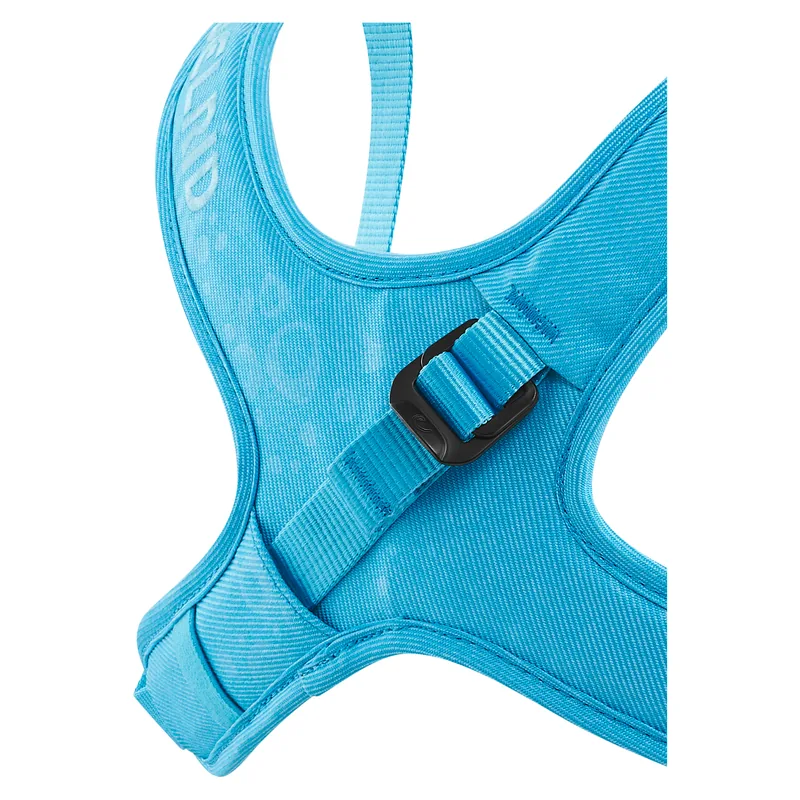
Full-body options already listed
- Edelrid Fraggle III. Fits 18 months to 40kg. The gear page calls it the smallest full-body on the market, easy to put on, and widely recommended. It is also the Quick Pick for best harness under age 8. Getting Started names the Fraggle as an excellent choice at ages 5 to 7.
- Black Diamond Momentum Full Body. Ages about 3 to 6 on the gear table. High tie-in point. Good waist buckle. Getting Started names it alongside the Fraggle.
- Petzl Macchu plus Edelrid Kermit II. Modular: sit harness plus optional chest piece for full-body. Versatile sizing.

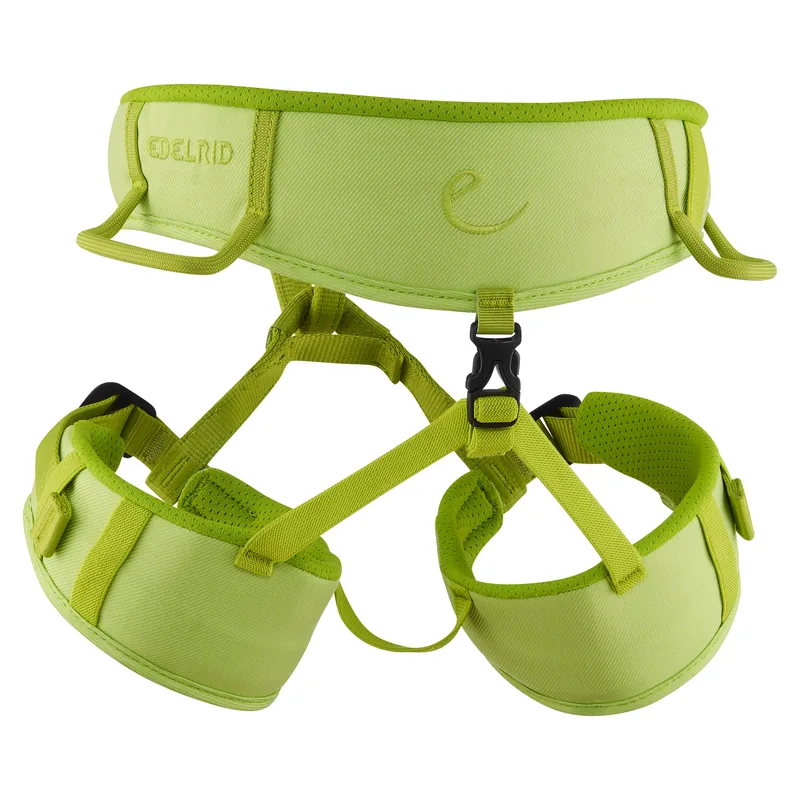
Sit-harness options already listed
- Edelrid Finn III. Smallest sit harness available. Good for transitioning from full body.
- Black Diamond Momentum Kids (sit). Age about 10+. Adjustable leg loops. Gear loops. Also the Quick Pick for best harness for older kids.
- Petzl Macchu. Widest adjustability. Bright green belay loop. Can pair with Kermit II if you still need the chest piece.

The older gear-guide post also names the Black Diamond Momentum, Petzl Macchu, and a Mammut Kinder harness as well-regarded youth sit harnesses, and tells parents to check the manufacturer's weight and size guidelines. We are not adding new models here. For current links and the full tables, stay on the gear guide.
What does a first harness add to the starter kit?
We will not invent a national average, and we do not list a sticker price for a named harness. The starter-kit bands below are already on the gear page.
- Starter-kit line for a harness: $55 budget, or $65 to $90 mid-range.
- First-season total if you add a harness for top-rope or lead: about $102 to $125 budget, or $152 to $205 mid-range.
Gyms rent harnesses. You do not need to buy one for the first visit. The older gear-guide post says to buy a youth harness after two or three gym visits if your child is climbing regularly. That matches the first-visit rule on Getting Started: wait on buying shoes or a harness until they have climbed a few times and still want to come back.
Fit beats a birthday
Age 8 is the transition this site already cites most often. It is not a switch that happens on the morning of a birthday. If a sit harness can slide up over the hips in an inverted fall, keep the full-body harness. If you are unsure, ask gym staff to check fit before you buy, and read the manufacturer's size range for that model.
A simple decision plan
- If your child is only bouldering, skip the harness. Pads, not ropes, are the protection.
- If they are rope climbing at ages 5 to 7, use a full-body harness. Getting Started already requires it.
- Around age 8, try the hip-to-waist test this site already publishes: can a sit harness slide up over the hips in an inverted fall? If yes, stay in a full-body harness.
- If they are smaller than peers after age 8, staying in a full-body harness longer is already the Getting Started note, not a delay you invented.
- Rent first. Buy only after a few visits, and only in the category the fit test supports.
- When you do buy, use the models and fit notes already on the gear guide. Check the manufacturer's size range for that specific harness.
For the product tables, Quick Picks, and starter-kit math, stay on the complete gear guide.
Frequently Asked Questions
When does my child need a full-body harness instead of a sit harness?
Use a full-body harness for roped climbing until about age 8, or until a sit harness cannot slide up over the hips in an inverted fall. Getting Started already requires a full-body harness at ages 5 to 7 because young children lack the hip-to-waist ratio that keeps a sit harness from riding up. Most climbers move to a sit harness around age 8, though some smaller children stay in a full-body harness longer.
What is the difference between a full-body harness and a sit harness?
A sit harness is safe only when the child has enough hip-to-waist ratio to keep the waist belt from sliding up over the hips. A full-body harness is the tool this site already requires for younger children on a rope, because a sit harness can ride up or let a child flip in a fall. The gear table also lists a modular option: the Petzl Macchu sit harness plus an Edelrid Kermit II chest piece.
At what age can a kid switch to a sit harness?
Most climbers on this site transition around age 8. That is guidance, not a birthday rule. The gear guide also says any child who cannot keep a sit harness from sliding up over their hips should stay in a full-body harness. An older gear-guide post describes full-body as often recommended under about 80 pounds. Check the manufacturer's size range for the specific model.
Which full-body harnesses does this site already recommend?
Getting Started and the gear guide already name the Edelrid Fraggle and the Black Diamond Momentum Full Body. The gear table lists the Edelrid Fraggle III for 18 months to 40kg and the Black Diamond Momentum Full Body for ages about 3 to 6. A Petzl Macchu plus Edelrid Kermit II combo is listed as a modular sit-plus-chest option.
Can I rent a harness instead of buying one?
Yes. Gyms rent harnesses, and you do not need to buy anything for the first visit. The older gear-guide post says to buy a youth harness after two or three gym visits if your child is climbing regularly. The gear starter-kit table lists a harness at $55 on a budget, or $65 to $90 mid-range.
What if my child is older than 8 but still small?
Stay in a full-body harness if a sit harness can slide up over the hips. Getting Started already says some smaller children may benefit from staying in a full-body harness a bit longer after age 8. Age is a starting point. Hip-to-waist fit is the test this site already publishes.
Sources
- YouthClimbing.com gear guide (age ~8 / inverted-fall safety note, Fraggle III 18 months to 40kg, Momentum Full Body ages ~3 to 6, Macchu + Kermit II modular option, sit-harness table, starter-kit harness $55 / $65 to $90)
- YouthClimbing.com Getting Started guide (full-body required at ages 5 to 7, hip-to-waist ratio, Fraggle and Momentum Full Body, transition around age 8, smaller children may stay longer)
- Bouldering or top-rope: which should my kid start with? (younger children who rope climb need a full-body harness; gyms rent harnesses; wait to buy)
- Youth Climbing Gear Guide (gyms rent harnesses; buy after 2 to 3 visits; full-body often recommended under about 80 pounds; check manufacturer size guidelines)